
Parkland City Directory Shelves
Parkland city directory research begins at the Tacoma Public Library Northwest Room and the Puget Sound Regional Archives. The Northwest Room holds Tacoma directories beginning in 1885 and telephone books from 1919. Its wider Tacoma and Pierce County runs help when Parkland is filed under a nearby postal label. The regional branch lists many Polk volumes, plus school, census, probate, and property series that can confirm a directory clue.
| Directory collection | Known years | Repository | How to use it |
|---|---|---|---|
| Tacoma city directories | Beginning in 1885 | Tacoma Public Library Northwest Room | Local-history room; appointment recommended |
| Polk directory runs | 1919; 1922-1928; selected years through 1983 | Puget Sound Regional Archives | Ask staff by volume and year |
| Address cross-references | Beginning in 1928 | Northwest Room directory runs | Search a street when the surname is unknown |
| Telephone directories | Beginning in 1919 | Tacoma Public Library Northwest Room | Compare with dated city listings |
The archive list is not continuous. Known Polk holdings include 1930, 1933, 1935-1942, 1949, 1951, 1955-1963, 1965-1966, 1968-1970, 1972, 1974, 1976, and 1983. A missing year should stay marked as a gap. No open, complete scan of a Tacoma or Parkland volume was verified, so the physical shelf and a staff request remain key access channels.
Parkland Directory Research Room
The Tacoma Public Library Northwest Room is on the second floor of the Carnegie Building at 1102 Tacoma Ave S. Staff recommend a research appointment. Visitors may bring a laptop, phone or camera, and pencils, but not pens. USB scans are available under current room rules. These details matter when a Parkland city directory search requires several volumes and a careful image of each title page, abbreviation key, and entry.
The room also keeps newspapers, obituary tools, maps, photographs, postcards, manuscripts, architectural plans, and genealogy sources. That mix can test whether the same name and address belong together. Before visiting, email nwr@tacomalibrary.org or call 253-280-2814 with the place label, surname, street, and likely years.
See the Northwest Room research page before using the collection image below.
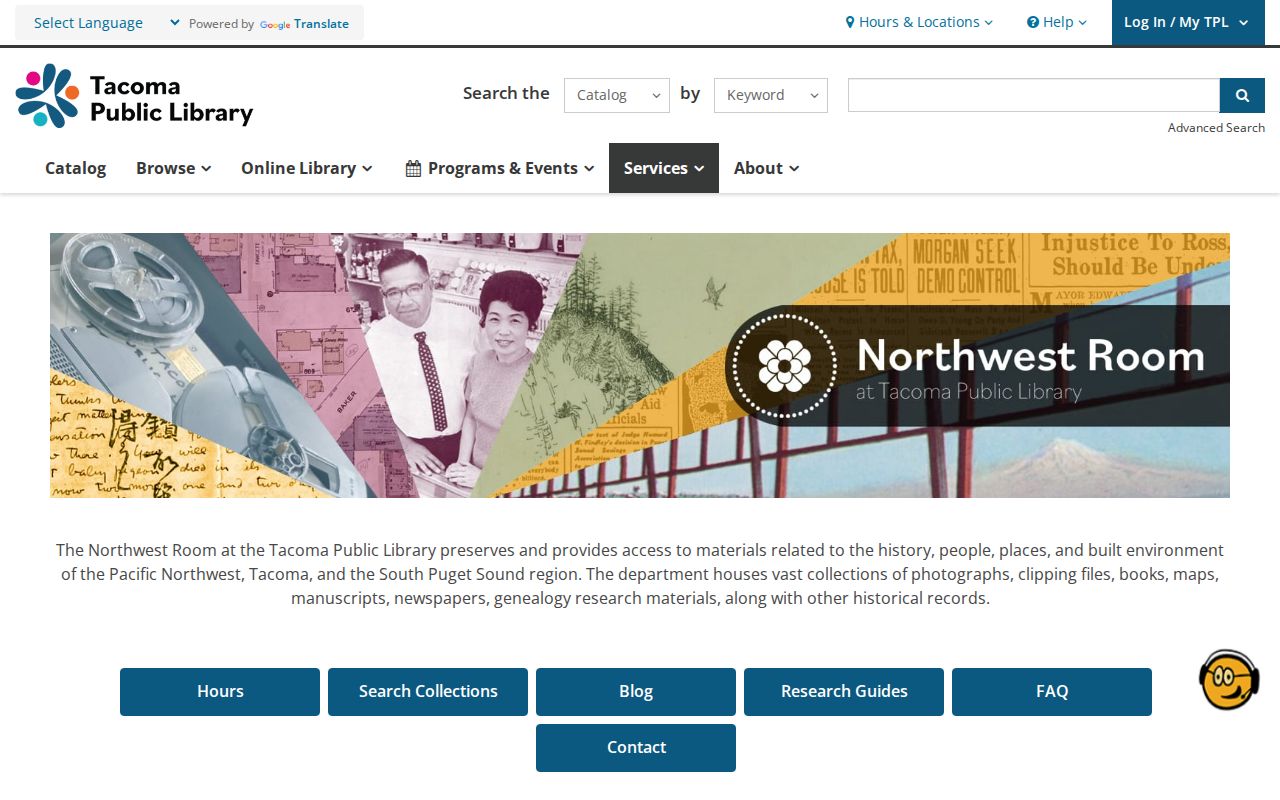
The captured library page identifies the local-history route that supports a Parkland directory search and related map or obituary work.
Discover Parkland Directory Records
The Northwest Room's online descriptions moved to Access to Memory. Use it to discover collection names, dates, creators, and related records before asking staff for a physical item. It is a finding aid, not a promise that every directory page is scanned. Search Parkland, Tacoma, an institution, or a family name, then record the collection title and reference details.
The Northwest Room digital catalog is shown in this captured source.
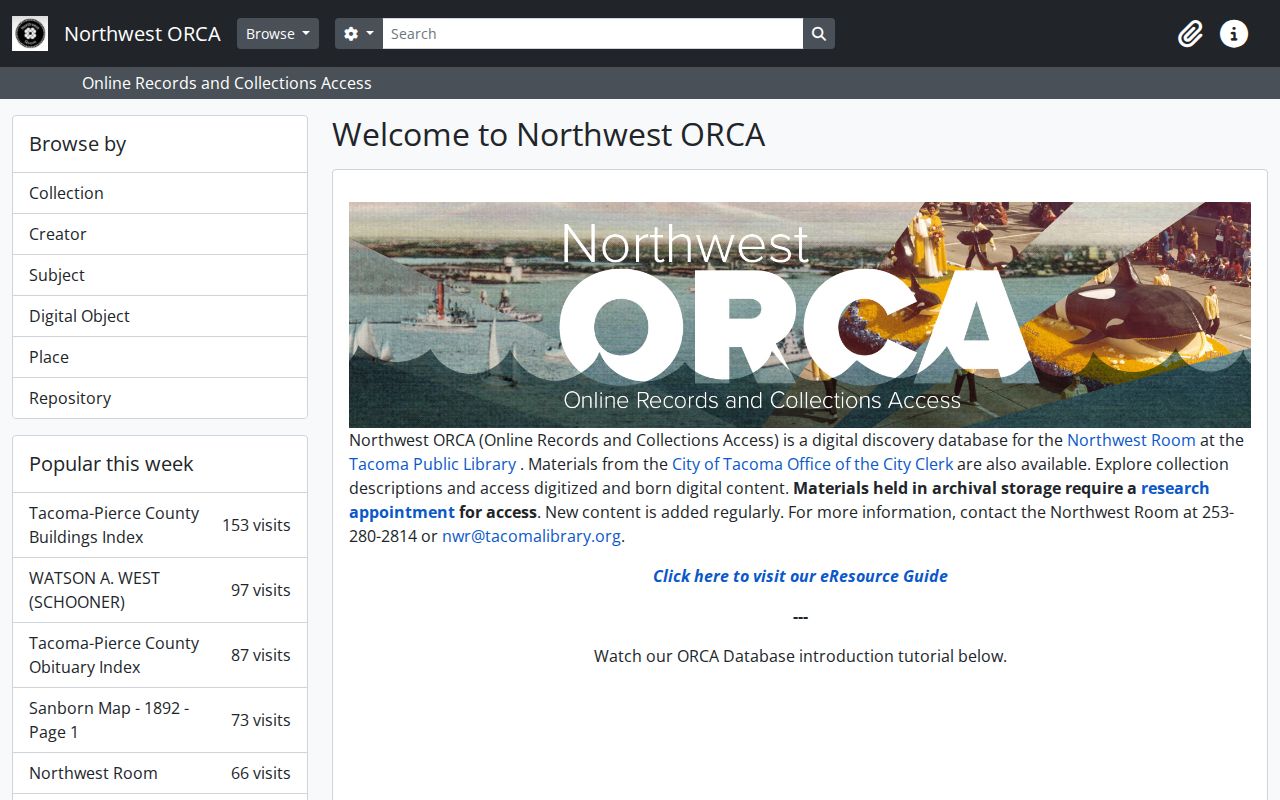
The catalog screen is useful for planning a request; it should not be described as a full digitized city directory.
Parkland City Directory Milestones
The library's building-research material gives three clear points for reading the local directory shelf. They explain why later volumes answer address questions that early books cannot.
| Year | Directory change |
|---|---|
| 1885 | First Tacoma directory cited by the Northwest Room guide |
| 1911 | Spouse listings begin, adding household context |
| 1928 | Address cross-referencing begins, aiding reverse searches |
| 1983 | Latest Polk year named in the regional archive holdings list |
These milestones do not mean every year survives or that each book covers Parkland in the same way. Record the title, year, publisher, and place heading from the volume itself.
Read a Parkland Directory Entry
A city directory entry is a compact, dated statement. Copy the exact spelling and initials. Then record the occupation, household or spouse notation, street number, street name, and place label. Do not add owner or renter status unless the book prints a mark and its key defines it. A listing shows that the publisher associated a person with an entry in that year. It does not prove ownership or an uninterrupted stay.
| Name | Printed surname, given name, and initials, preserved as shown |
|---|---|
| Household note | Spouse or other notation, when the volume supplies one |
| Work | Occupation and sometimes a business or institution |
| Address | Street, rural route, or place wording used in that year |
| Source key | Volume title, year, page, entry type, and abbreviation key |
- Criss-cross directory
- A reverse section arranged by street and house number instead of surname.
- Householder index
- A list that groups the main named household entries, often apart from businesses.
- Abbreviation key
- The volume's guide to shortened words and marks. Save it before reading an entry.
Parkland's old rural routes and shifting postal labels require care. Preserve the original label first. A modern equivalent is an inference until a plat, legal description, map, or long run of address evidence supports it.
Parkland Directories Meet PLU
Parkland grew around Pacific Lutheran University, making institutional archives a strong companion to city directories. The PLU Archives preserves university records and material on Parkland, Pierce County, and Scandinavian immigrants. PLU's historical exhibit places Bjug Harstad in Parkland in 1890 and the PLU Association's incorporation later that year. Parkland Lutheran traces its church to 1893 and school to 1894.
These sources explain names, groups, and institutions found in an early Parkland directory. They do not prove a modern address. Contact PLU Archives at archives@plu.edu or 253-535-7411 and ask by record group, date range, and subject. This is useful when an early listing has no street number.
Archive Partners for Parkland Residents
The Puget Sound Regional Archives offers more than Polk books. Pierce holdings include territorial censuses, school censuses, graduate registers, teacher and school-official records, marriage certificates, wills, probate files, and Tacoma School District directories from 1902 through 1948. Each series can test a dated city directory clue without turning it into a broad claim about a person.
The Pierce County Historical Association collections add newspaper inventories, a family-history index, and plat maps.
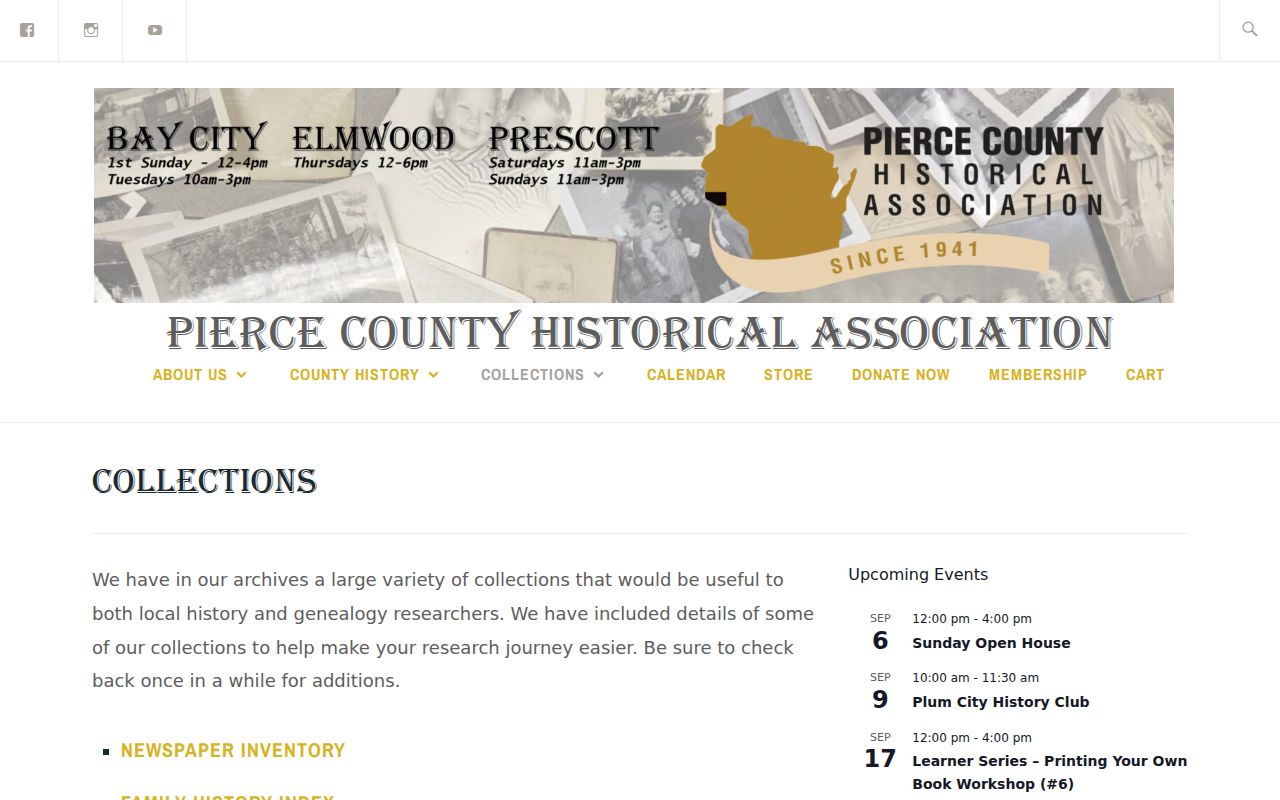
The collection page points toward support when a Parkland city directory year is missing or an old street label needs context.
Check Parkland Directory Clues
Directories work best beside maps and newspapers. Tacoma Public Library's building guide recommends comparing entries with Sanborn fire-insurance maps, permits, newspapers, and property records because street numbers can change. The library catalog identifies Tacoma Sanborn volumes for 1885 and 1888, 1896, and 1912. A map footprint may show a building, but it does not name its resident.
Keep each source in its own column: directory year and entry, map year and footprint, newspaper date and event, parcel or permit number, and the reason the records seem connected. This dated method helps avoid joining two people who share a surname or assuming that a later postal label belonged to an earlier record.
Note: A city directory absence may mean a move, death, omission, changing place label, or unlisted household; it does not choose among them.
Parkland School Directory Trail
The Tacoma School District directory series from 1902 through 1948 is an unusual companion to the Parkland city directory shelf. The Puget Sound Regional Archives also lists school censuses, eighth-grade graduate registers from 1901 through 1937, teacher registers from 1919 through 1950, and school-official records from 1906 through 1930. Together, these records can place a child, teacher, or family within an education system during a stated school year.
Start with the archive catalog description and series identifier. Ask staff about the precise year and district coverage before assuming Parkland appears. Copy the school-year label, names as written, and any district or institution field. A school record does not by itself prove a particular home address, so compare it with a directory entry only when the date, name, and local context align.
That distinction is useful for family history. A person absent from one Polk volume may appear in a school census or directory, yet each record still describes a limited role. Keep the two citations separate and state only what each one shows.
Archive staff may need more than a street address to retrieve older property or school material. Supply the known name, date span, institution, parcel number, legal description, or archive series when available. A focused request saves time and keeps an uncertain Parkland match from being treated as a confirmed household.
Trace Parkland Family Directory Years
Follow a Parkland household through dated volumes, not through a reconstructed profile. A steady sequence can reveal when a name appears, when an address changes, and when a spouse notation begins or ends. Census, school, marriage, probate, obituary, and cemetery sources can then test a limited family-history question.
- Search the surname and likely spelling variants in one verified directory year.
- Copy the full entry and citation, then check nearby years without filling gaps by guess.
- After 1928, test the printed address in the cross-reference section.
- Pair the timeline with a federal or territorial census and the school series.
- Use the Northwest Room obituary index or a verified cemetery source to explain an endpoint.
A disappearing listing has several possible causes. Search the next volume under the spouse's name, check an obituary index, and look for the same street in the reverse section. When no answer appears, leave the break unresolved. Researchers seeking a modern name check can move to the Parkland resident lookup, where current official indexes stay separate from the historical shelf.